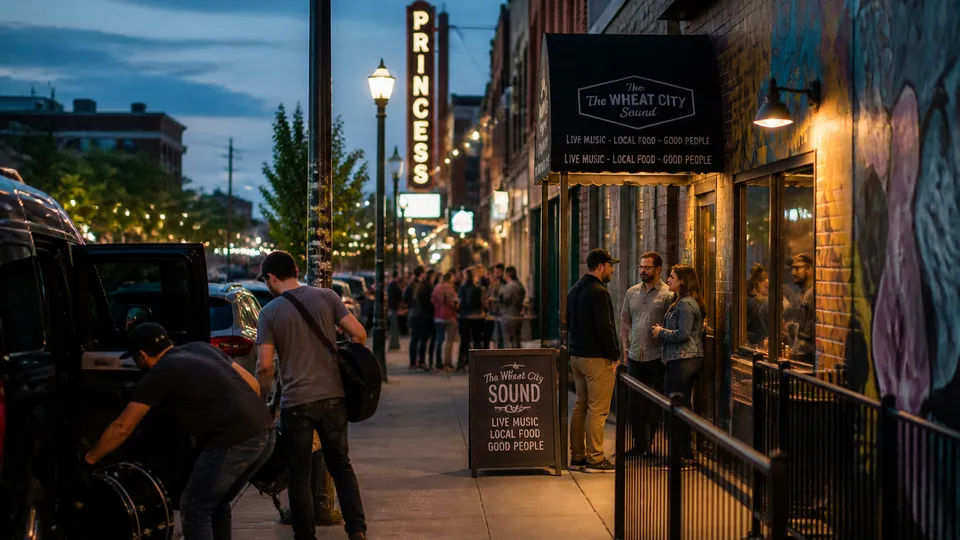
On a Saturday afternoon in a converted downtown storefront, a potter molds clay beside a drummer rehearsing a West African rhythm. Outside, a farmer in muddy boots haggles over a painting that will hang in a farmhouse kitchen; inside, a university student writes lyrics about leaving home. The juxtaposition — the rural and the avant-garde rubbing shoulders — has become a defining image of in Westman.
For much of the past half-century, cultural life in southwestern Manitoba was counted in pageants, municipal music nights, and the steady calendar of community halls. Over the past five years, that rhythm has been interrupted by a quieter revolution: artists migrating into lower-rent downtown spaces, informal collectives pooling resources, and institutions rethinking their role in a region marked by demographic aging, agricultural change, and intermittent economic uncertainty.
Brandon University’s School of Music and the Art Gallery of Southwestern Manitoba are central to this story. Both anchor institutions provide training, exhibition space and contact points between students and long-term residents. But the change that matters most happens in the liminal spaces between institutional programs and everyday life: a pop-up gallery in an empty insurance office, a residency hosted in a grain elevator-turned-studio, musical collaborations that begin in a classroom and continue at a kitchen table.
“I moved back because I wanted to make a life here, not just a practice,” said a painter who returned to Brandon after studying in Winnipeg. “I can afford a studio. I can teach a workshop. People bring stories, and suddenly our exhibitions aren’t just art objects — they’re conversations.”
Local organizers describe the environment as simultaneously fragile and fertile. Municipal budgets for culture are tight, and provincial funding cycles feel mismatched to the slow work of community arts. Yet artists in Brandon and the surrounding towns have learned to cobble together a working ecology: microgrants from community foundations, barter agreements with local businesses, and creative partnerships with schools and health services. That patchwork approach has advantages — flexibility and responsiveness — but it also leaves important programs precarious.
Emergent trends are visible in three overlapping spheres.
-
Space and adaptability. Vacant storefronts, once a symptom of retail decline, have become experimental venues. Collective studios — co-ops where painters, ceramicists, and makers share rent and tools — are proliferating. These spaces double as teaching hubs, attracting seniors who want to try watercolor and schoolchildren who have never touched clay. The result is increased cross-generational contact that community leaders say has measurable social benefits.
-
Cultural . Artists are less often waiting for grants; they are creating small businesses that fold cultural production into local economies. Pop-up markets selling zines, prints, and pottery are attracting visitors from towns like Virden and Neepawa, transforming weekend traffic into real income. A visible shift is the willingness of artists to negotiate contracts with local institutions — health care centers commissioning murals, small breweries hosting concerts — bringing art into daily life.
-
Reclaiming heritage. There is a new focus on place-based storytelling. Musicians and playwrights mine oral histories from farm families; visual artists reinterpret prairie architecture. These projects serve dual purposes: they celebrate a lived past and provide a framework for communities to imagine futures that are not mere replicas of the city.
But the gains are not evenly distributed. Smaller towns still face the attrition of young people and the closure of formal venues. Some artists report that while audiences are eager, they lack sustainable paying opportunities. Others raise a thornier concern: as downtowns revitalize, rents may rise, and the very artists who seed renewal could be priced out.
Community leaders say the solution requires intentional policy and patient investment. Municipal cultural strategies that prioritize affordable studio space, long-term leases for artist-run centers, and support for creative incubators could stabilize the ecosystem. Equally important are partnerships between universities and towns — programs that deliver equipment and mentorship outside campus borders and that incentivize graduates to remain in the region.
There are signs of that future being built. Collaborative festivals that combine music, Indigenous storytelling, and agricultural exhibitions attract diverse audiences and force local governments to take cultural planning seriously. A health-care wing that commissions local artists to lead workshops for seniors saw attendance rise; school boards report improved student engagement when arts are integrated into curricula.
The real story is human: a retired teacher who found new purpose teaching printmaking to teens; a third-generation farmer whose commissioned portrait of a grandparent has become a community touchstone; a young composer who writes scores for a community choir formed to sing stories of migration. These are not isolated acts of philanthropy. They are, increasingly, deliberate strategies for sustaining social life in a region where population, economy and identity are changing.
If Westman’s arts renaissance is to endure, the next phase must move beyond improvisation. That will require sustained civic commitment and smart collaboration: preserving affordable spaces, aligning funding with long-term projects, and amplifying cross-sector ties from health to education. The reward is tangible — livelier downtowns, new sources of income, and a richer sense of belonging — but the deeper gain is civic. In the quiet intersections of studio and kitchen table, the region is learning how to make culture not as spectacle but as the infrastructure of community itself.
As dusk falls over Brandon, strings of lights go on above a repurposed alley where a puppet show starts for children. The audience — farmers, students, retirees, newcomers — settles in. For a short hour they share a story that is neither purely local nor wholly global, but crafted in the particular grammar of place. That shared experience, many in Westman now believe, is the seed of whatever comes next.